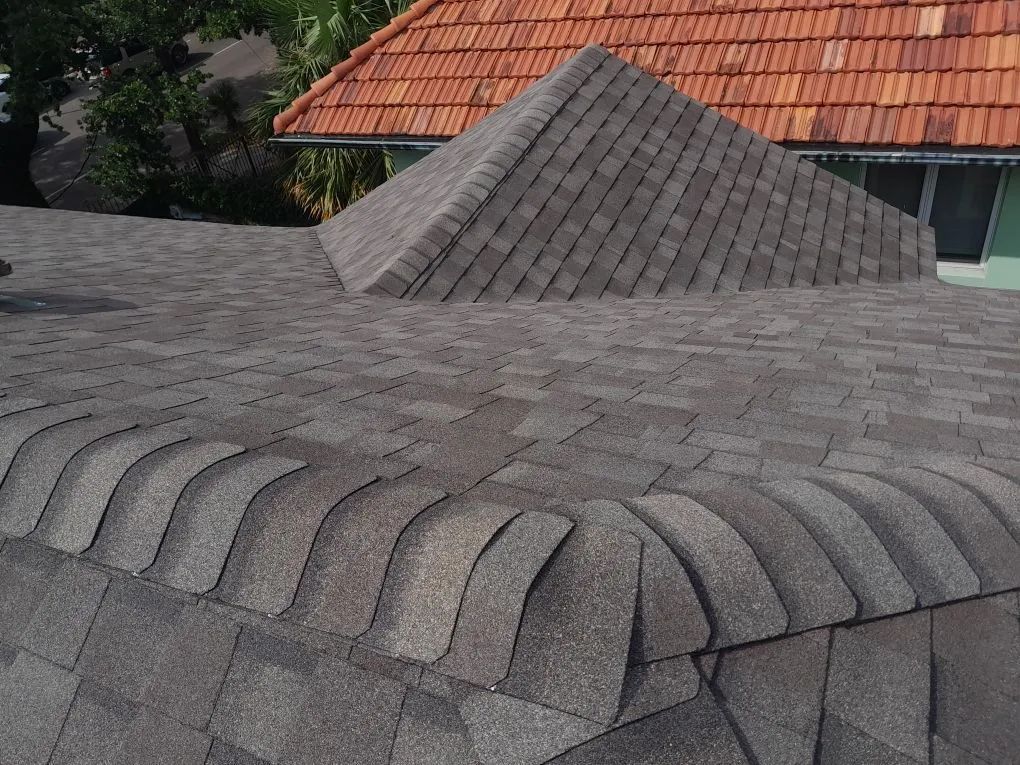
After a storm, the clearest roof storm damage signs are missing, lifted, or cracked shingles, piles of shingle granules in your gutters or at the base of downspouts, bent or torn flashing around chimneys and vents, and dented gutters or vents. Inside, watch for fresh water stains on ceilings, a musty smell, or daylight and dark streaks in the attic. Some damage stays hidden for weeks, so a close look after any strong wind or hail event is the safest move.
A line of thunderstorms rolls through Tangipahoa Parish overnight, and by morning the yard is littered with branches, shingle fragments, and a stray piece of somebody's fence. Your roof looks fine from the driveway. That's exactly the problem. Wind and hail rarely leave a neat hole you can point to. They loosen, lift, bruise, and crack — and the damage often goes unnoticed until a ceiling stain turns up during the next hard rain. Knowing what to look for right after the weather clears is how you catch a small issue while it is still small.
Roofs across Hammond, Ponchatoula, Covington, and the rest of Southeast Louisiana take a beating that roofs in calmer climates never see. Between summer squalls, hurricane season, and the occasional hailstorm, a roof here works hard. This guide walks through the signs you can check yourself, what they mean, and when it makes sense to bring in a roofer for a closer look.
Why Louisiana Storms Are Tough on Roofs
The weather in this part of the state hits roofs from several directions at once. High winds catch the edges of shingles and create uplift, breaking the sealant bond that holds each course down. Even when a shingle does not blow off, that stress can crease it, and a creased shingle no longer sheds water the way it should.
Hail adds a different kind of harm. It acts like a hammer, bruising the asphalt mat under the surface and knocking away the protective granules. Once those granules are gone, the exposed asphalt bakes in the Louisiana sun, dries out, and grows brittle. That is often where a leak begins months later.
Then there is the rain itself. Wind-driven rain finds any opening a storm has already created — a lifted shingle, a gap in flashing, a popped nail — and pushes water into places it was never meant to reach. High humidity keeps the roof deck and attic damp long after the sky clears, which slows drying and gives moisture more time to cause trouble. Add older homes with aging roofs and the wear adds up fast.
Signs You Can Spot From the Ground
You don't need to climb anything to catch the most common damage. A slow walk around the house, looking up, tells you a lot. Do this in good light, ideally the morning after a storm.
Missing or lifted shingles: Scan the roof planes for gaps, bare spots, or shingles that sit at an odd angle. A missing shingle leaves the underlayment or bare deck exposed. Lifted or curled shingles have lost their seal and will let wind-driven rain slip underneath.
Shingle pieces in the yard: Fragments of shingle, tar-paper bits, or granule-coated flakes scattered across the lawn or driveway usually came from your roof or a neighbor's. Their presence is a cue to look harder at the roof itself.
Granule loss: Granules are the sandpaper-like coating on asphalt shingles. After hail or heavy wind, they wash into gutters and collect at the bottom of downspouts, looking like coarse black sand. From the ground you may also notice shiny or darker patches on the roof where the granules have worn away, and the smoother asphalt shows through.
Dented or bent gutters, downspouts, and vents: Metal gutters and downspouts show hail strikes as dimples and dents. Roof vents, turbines, and pipe caps can be dented or knocked crooked. Because these metal parts sit out in the open, damage here often signals the shingles took a hit too.
Bent or missing flashing: Flashing is the metal that seals the joints around chimneys, skylights, vents, and where the roof meets a wall. High wind can lift it, and hail can dent or crack it. Loose or missing flashing is one of the more common paths for water to sneak in, so any gap you can see from the ground is worth noting.
Debris resting on the roof: A fallen branch may look harmless, but as it shifts in the wind it grinds granules off the shingles and can hide a puncture underneath. Anything sitting on the roof deserves a closer look.
Signs to Check Up Close
Some damage only shows itself from a ladder at the roof edge or through binoculars. You don't need to walk the roof — that's flat-out dangerous, especially on a wet or steep surface. But a careful look from a stable ladder at the eave can reveal more detail.
Creased or cracked shingles: Wind stress leaves a horizontal crease across a shingle even when it stays in place. Hail leaves round bruises, cracks, or spots where the granules are punched away. Both weaken the shingle's ability to keep water out.
Popped or backed-out nails: Nails that have worked loose sit raised above the shingle surface. A raised nail head lifts the shingle above it and creates a small opening. One storm later, that nail can let go entirely.
Damaged or loose ridge caps: The shingles that run along the peak of the roof take the full force of the wind. Check whether any of them are torn, lifted, or gone.
Worn or exposed sealant: Around vents, pipe boots, and flashing, the sealant can crack or pull away after a storm. Rubber pipe boots in particular tend to split with age and weather, and a storm can finish the job.
Signs Inside Your Home and Attic
By the time damage shows up indoors, water has usually been getting in for a while. That makes interior signs some of the most important to catch — and they are easy to check without any climbing.
Fresh water stains: Look at ceilings and the tops of walls for yellow, brown, or ringed stains that were not there before. A new stain after a storm point to water coming through the roof, even if the roof looks intact from outside.
A musty smell: Trapped moisture in the attic or ceiling cavity gives off a damp, musty odor. In a humid climate, that smell can be the first hint of a slow leak before any stain appears.
Daylight in the attic: On a dry day, go into the attic during daylight hours and look up. Any pinpoints of light coming through the roof deck mean there is a hole or gap that water can follow.
Dark streaks or wet spots on the decking: Use a flashlight to check the underside of the roof deck and the rafters. Dark stains, streaks, or damp spots signal moisture that has already made it through. Wet or matted insulation is another red flag — soggy insulation stops doing its job and holds dampness against the structure.
Sagging: Any dip or sag in the roofline or the attic decking suggests the structure has taken on water or damage. This one warrants prompt attention.
Tip: Photograph anything you find — shingles in the yard, granules in the gutter, ceiling stains, attic streaks — and note the date of the storm. A clear before-and-after record helps a roofer understand what happened and how the damage progressed, and it keeps you from second-guessing whether that stain is new.
Damage That Hides Until Later
Not every storm leaves an obvious mark, and that's where homeowners get caught off guard. A shingle can lose its seal without moving out of place, so the roof looks perfect while it quietly lets wind lift it during the next storm. Hail bruises may not crack the surface right away — they weaken it, and the failure shows up months down the road once the sun has dried the exposed asphalt.
This delayed pattern is why a roof that "looks fine" after a storm still deserves a look. Wind-driven rain from a later storm exploits the openings the first storm created. Slow leaks travel along rafters and decking before they ever reach a ceiling, so the visible stain is rarely directly under the actual entry point. The gap between when damage happens and when you notice it is exactly what turns a minor repair into a bigger project.
Warning: Never walk on a roof to inspect it yourself, especially after a storm. Wet shingles, hidden soft spots, and loose granules make the surface far more slippery and unstable than it looks, and storm-weakened decking can give way underfoot. Ground-level checks and a look from the attic are safe. Anything that requires getting on the roof is a job for a roofer with the right equipment and training.
What to Do When You Spot the Signs
Finding one or two of these signs doesn't always mean a full replacement. It means the roof needs a proper look so you know what you are dealing with. Here is a practical order of steps.
Document what you see: Photos, dates, and a short-written list of every sign — inside and out — give you a clear starting point.
Do a temporary interior catch if water is actively coming in
A bucket under a drip and moving valuables away from the wet area limits interior damage while you arrange a repair. Keep this simple and stay off the roof.
Get a professional roof inspection: A roofer can safely walk the roof and check the things you can't see from the ground — the condition of the seal on each shingle, hidden hail bruising, the state of the flashing and pipe boots, and whether the decking underneath is sound. A trained inspection tells cosmetic wear apart from damage that actually threatens the roof.
Address urgent openings quickly: Missing shingles, exposed decking, and active leaks are the ones to handle first, because every additional storm makes them worse. Roof repair, replacement, maintenance, and emergency response all start with knowing the true condition of the roof, and that comes from the inspection.
Acting while the damage is fresh is almost always the easier path. A handful of loose shingles caught early is a repair. The same roof left through two more storm seasons can become a much larger job once water has reached the decking and the framing.
Frequently Asked Questions
How soon after a storm should I check my roof?
As soon as it's safe, ideally the next morning. Early checks catch loose shingles and small openings before the next weather round. Waiting lets hidden damage spread, letting moisture sit longer in the roof deck and attic.
Can my roof be damaged even without missing shingles?
Yes. Wind can break a shingle's seal without displacing it, and hail can bruise asphalt without cracking the surface. Both weaken the roof and invite future leaks — watch for granules in gutters, dented metal, or interior stains.
What does granule loss actually mean for my roof?
Granules shield asphalt from UV rays. Storm-stripped granules leave asphalt exposed, drying it out and shortening shingle life. Some gradual wash-off is normal, but a sudden pile in the gutters signals impact damage from one storm.
Is it safe to inspect the roof myself
Ground-level checks and attic inspections are safe. Climbing onto the roof isn't — wet, granule-covered, or storm-weakened surfaces are slippery and can give way. Leave any roof-walking inspection to a professional with proper safety equipment.
Why would a leak show up weeks after the storm?
Damage often weakens a roof without breaking through immediately. A lifted shingle may hold until wind-driven rain forces water in. Water travels along decking before reaching a ceiling, so stains appear later and elsewhere.
How often should a roof be inspected in a storm-prone area?
At least twice a year, plus after any major storm. In Southeast Louisiana, where wind and hail events are frequent through storm season, that after-storm check catches damage early enough to keep repairs manageable.
Know Where Your Roof Stands Before the Next Storm
Storm damage rarely announces itself. It starts as a lifted edge, a scattering of granules, or a faint stain on a bedroom ceiling — small signals that add up to a roof quietly losing its ability to protect the home underneath. Learning to read those signals, and checking for them every time the weather turns rough, is the difference between a quick fix and a long, wet problem.
With 10
years of experience checking storm-worn roofs across Hammond, Louisiana, Community Construction Services
helps homeowners catch these warning signs early. A roof that looks fine from the ground can still be hiding damage that worsens with every passing storm, which is why a trained eye matters most right after severe weather rolls through the area.